
Why digital engineering is becoming foundational to medical device development
Written by Arric E. McLauchlan and Alessandro Viola

Medical device development is shaped by long timelines, high regulatory expectations, complex evidence requirements, and the extraordinary variability of the human body. As simulation, automation, and digital engineering become more central to the product development process, organizations are looking beyond individual analysis results and toward platforms that can manage, preserve, and reuse engineering simulation knowledge over time.
In this conversation, Arric McLauchlan, Principal Design Automation Engineer, Medtronic PLC, shares his perspective on the role of digital engineering in medical device development, including in silico clinical trials, data management, simulation workflow automation, multidisciplinary design optimization (MDO) collaboration, and the future of simulation-driven evidence.
“In silico clinical trials are much more often used to augment traditional clinical data by generating additional evidence through simulation.”
The complexities of medical device engineering
ESTECO: What makes medical device development uniquely challenging compared to other engineering industries?
McLauchlan: Medical device development presents several challenges that are less common in many other engineering industries. For example, the average Class III implantable device like:
- implantable pacemakers
- cochlear implants
- deep brain stimulators
- breast implants
- defibrillators
- renal and vascular stents
- high-risk software as a medical device (SaMD) with diagnostic or therapeutic functionality
can take roughly ten years to progress from initial concept to market launch (Sertkaya et al., 2022). At the same time, early-career engineers often remain in a role for around two years, and mid-career engineers for roughly five years. Over such long development timelines, knowledge loss associated with normal workforce turnover can become a significant challenge, though this is a difficulty shared by any industry with extended product development cycles.

The medical device field also operates under a high degree of regulatory oversight. Regulations govern not only product approval and market launch but, in some cases, the types of testing that can be performed and when it can occur. These requirements are important and well-justified, but they introduce additional complexity and administrative hurdles that are less pronounced in many other engineering domains, usually only shared by industries with extended product development timelines.
Perhaps the most fundamental challenge, however, is the extraordinary variability of the human body, which is coupled with the variability associated with large-scale manufacturing processes. People differ widely in anatomy, physiology, and underlying health conditions, making it difficult to define and design for all relevant use conditions. For devices that patients may ultimately depend on for survival, understanding these conditions is absolutely critical, because if there was a miscalculation, there is no going back once the device is implanted. Few industries face both such high variability in operating conditions and such high consequences for getting those conditions wrong.
To address this complexity, entire organizations focus on human factors and real-world use environments. Their role is to help engineers and simulation experts understand how devices will actually be used and what conditions they must perform under. Even gathering this information can be difficult, as it often requires studying physiological environments that are not normally observable, and the act of measuring or accessing them can itself alter the very conditions we are trying to understand, such as blood pressure or biochemical balance.
The role of SPDM platforms in long-term knowledge stewardship
ESTECO: You describe digital engineering platforms as foundational. What does that mean in practice?
McLauchlan: The contour plots and GIFs are the eye candy that get everyone excited. Most Modeling & Simulation (M&S) engineers are, understandably, focused on the outcomes of their individual analyses or studies and the impact those results can have for patients. But those are short-term views. The long-term value of Modeling and Simulation comes from the ability to store, organize, protect, disseminate (when appropriate), recall, and continually build on those results over time, to not only help a few patients, but to help many patients.
Having a digital engineering platform for simulation process and data management (SPDM) such as VOLTA designed for that long-term vision while still supporting the short-term needs of day-to-day analysis is critical. In practice, however, this is much harder than it sounds, because the requirements for short-term productivity and long-term data stewardship often conflict with one another. Resolving those tensions ultimately requires cultural change within the M&S community, which is never easy.
Minimizing the amount of change required from users goes a long way. In my opinion, that means developing a data management platform that sits quietly underneath the tools that subject matter experts (SMEs) already use every day, reducing friction for adoption. When that approach is paired with clearly demonstrating the short-term value it provides to SMEs, it becomes much easier to build momentum toward the broader, long-term vision.
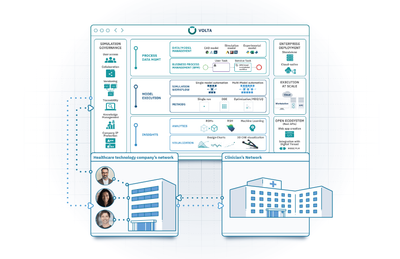
VOLTA digital engineering Platform: simulation data retention to improve in silico trial evidence and patient-specific care.
Augmenting regulatory submissions with in silico clinical trials
ESTECO: How do you explain the role of in silico clinical trials to stakeholders who may be skeptical?
McLauchlan: The concept of “in silico clinical trials” (ISCT) is often surrounded by misconceptions. A common assumption is that the goal is to replace traditional human clinical trials entirely. In reality, that may only be possible in extremely limited, extremely low-risk situations. Much more often, ISCTs are used to augment traditional clinical data by generating additional evidence through simulation.
By simulating a much larger and more diverse virtual population than would be feasible in a traditional clinical trial, these approaches can significantly expand our understanding of therapy risks and performance. Rather than replacing clinical studies, they provide complementary evidence that helps strengthen the overall body of data supporting a therapy.
This becomes particularly important in newer devices with novel new features. For instance, devices that include AI algorithms need a level of testing that just isn’t responsible or even feasible in traditional preclinical or clinical studies. Instead, validated models can be used as a surrogate to validate algorithms with much more efficiency and lower risk. This data can then be included in a submission as in silico evidence.
From a regulatory perspective, submissions that include in silico evidence still follow the same fundamental principle: balancing the risk of the decision being informed with the credibility of the supporting evidence. In fact, there is not a separate “ISCT submission.” Instead, simulation results are incorporated as an additional form of evidence within a standard regulatory submission.
The process typically begins by defining the model’s context of use and assessing the level of risk associated with that application. Based on that risk, a required level of model credibility is established. The model is then evaluated against that credibility target to determine whether it is sufficiently reliable to address the specific question of interest.
Breaking down organizational silos: engineering meets clinical and regulatory
ESTECO: What are the biggest barriers to scaling simulation and digital engineering in the medical device industry?
McLauchlan: Recent technological advancements have rapidly expanded our computational capabilities to the point where raw computing power is rarely the primary bottleneck. Instead, challenges such as data management and software license availability tend to create more immediate technical constraints.
However, even those factors are not the most significant barrier to scaling modeling and simulation in the medical device industry. The larger challenge is demonstrating and establishing the need, then working collaboratively across disciplines to address it. Unlike some technologies where adoption naturally follows availability, modeling and simulation require deliberate alignment across stakeholders. In particular, gaining buy-in from regulatory and clinical teams takes sustained effort. Without their engagement and without a clear demand for simulation-generated evidence, the technical capabilities of engineering teams are much less impactful.
Even when all parties do align on the shared goal, figuring out exactly how to progress toward that goal is still a significant challenge. This is a brand-new paradigm for designing submissions, and as such, it can be difficult to find the right path forward. One specific obstacle, for example, is that preclinical and clinical live in statistics-dominated realms, focusing on population data, whereas M&S is generally deterministic, focusing more on uncovering mechanistic details. Figuring out where and how to apply the right tools to answer the right questions while making sure all parties understand the intricacies, nuances, and limitations of that tool’s outputs is certainly a challenge.
But when engineering, regulatory, preclinical, and clinical groups do manage to get aligned around shared objectives and a shared path forward, it can be incredibly powerful. This alignment can influence how preclinical and clinical studies are designed; for example, a preclinical study can be designed to target endpoints that help inform or validate assumptions and conditions used in a preclinical simulation model. This simulation model can then be reconfigured with the intent to support clinical studies. When that level of coordination is achieved, the development process becomes far more efficient and integrated.
ESTECO: How do regulatory requirements influence how simulation data is generated and managed?
McLauchlan: Regulatory agencies across different geographies have varying requirements, but they generally follow similar principles for data retention. While the exact timelines may differ, data used to support a regulatory submission typically must be retained for at least ten years, or for the life of the product plus two years, whichever is longer. In some cases, this effectively means the data must be preserved indefinitely.
In addition, any simulation data used in a regulatory context must undergo a rigorous validation process. This can include validation of the underlying software and code, verification and validation of the models themselves, and careful review of the statistical methods and assumptions used in the analysis.
As clear as these guidelines are for specifying the duration of retention, figuring out which files and artifacts need to be retained is not always obvious. This can take coordination with regulatory teams on the intended use of the data, leading to the need for agile governance for how engineers use data management platforms.
Streamlining simulation workflows with automated design optimization
ESTECO: How do you structure collaboration across teams, including engineering, clinical, and regulatory?
McLauchlan: I’ve loosely based my approach to collaborative workflow development on the AGILE Paradigm framework developed through the Horizon 2020 EU research grant (Imco van Gent et al.). I find it to be a strong foundation for organizing collaboration across engineering disciplines, preclinical, clinical, and regulatory teams because it provides a structured way to align objectives, responsibilities, and communication throughout the development process.
That said, I also believe it’s important for teams to remain flexible when applying any framework. In practice, roles and responsibilities often need to adapt to the specific skills and expertise of the individuals involved. Rigidly adhering to a framework can sometimes limit a team’s effectiveness, so I view the AGILE Paradigm more as a guiding structure than a strict set of rules.
For anyone interested in improving collaborative workflows in this space, I highly recommend reviewing the publications associated with this work, as they provide valuable insight into one way multidisciplinary teams can organize and operate effectively.
ESTECO: How does workflow automation improve efficiency and reduce manual effort?
McLauchlan: When I think about building a workflow, I start with the stakeholders' needs. Not just their current needs, but how those needs might evolve over time. That perspective shapes how the workflow is structured from the beginning, with a particular focus on workflow I/O.
I focus on designing modular simulation workflows with modeFRONTIER, process automation and design optimization software, that can be easily rearranged or combined to address new problems as they arise. This modularity improves reusability and allows the same components to support multiple use cases without needing to start from scratch.
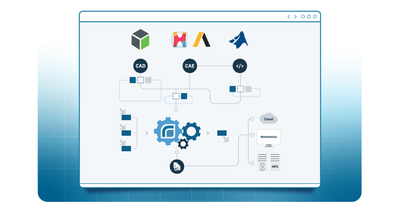
modeFRONTIER: automate modeling and simulation solvers for multi-objective design optimization of structural heart valve.
Automation is already an efficient way to solve problems, but its impact grows significantly when workflows are designed with reuse in mind. By enabling teams to apply the same automated components to slightly different problems with minimal reconfiguration, we can reduce manual effort while scaling efficiency across many analyses.
ESTECO: Can you share an example where simulation and optimization significantly improved development outcomes?
McLauchlan: While I can’t go into specific examples, there are many cases where automated simulation and optimization have given our design engineers a far more comprehensive understanding of the response space for their products. These approaches allow us to explore levels of detail that would be extremely difficult to achieve through bench testing alone, if not altogether impossible, and often impractical in preclinical studies.
By systematically exploring a wide range of design parameters and operating conditions, engineers gain deeper insight into how a system behaves across its full design space. That understanding enables stronger design decisions earlier in the development process.
In practice, this has helped streamline preclinical phases by clarifying which design directions are most promising before physical testing begins. The result is faster decision-making and, in many cases, reduced subject counts in preclinical studies.
Looking ahead: the future of simulation in medical technology
ESTECO: Where do you see digital engineering having the biggest impact in the next three to five years?
McLauchlan: Digital engineering is an exciting space to be in right now, particularly in the medical device industry. Advancements are happening in many directions at once, which makes it difficult to predict exactly where the field will be in the next three to five years.
That said, I believe automation, in both data generation and data management, will be at the center of many major advancements. As our ability to automatically create, organize, and analyze data continues to improve, it will enable more streamlined, data-informed workflows throughout the development process.
Ultimately, this will ensure that more detailed information flows more efficiently through the system, supporting physicians with stronger evidence and, in turn, improving patient outcomes.
I’m very excited to be working in this area and honored to help develop this framework for our patients. I can’t wait to see how far we take this.
ESTECO: What advice would you give organizations trying to adopt simulation and digital engineering more effectively?
McLauchlan: Focus on developing a strong data management framework early; it will pay dividends over time. Designing the infrastructure with clear intent from the beginning helps ensure that data can be organized, preserved, and reused effectively as programs evolve. At the same time, it’s important not to be overly rigid. Some degree of iteration is inevitable, and organizations should be willing to learn from early missteps, provided this does not compromise security or privacy.
When it comes to software tools, most commercial platforms have capable competitors, and the technical differences between the tools are often relatively small and nuanced. Rather than focusing exclusively on selecting the “perfect” tool, it is often more valuable to choose the right partner behind the tool. Companies like ESTECO that actively listen to their customers, respond to their needs, and work to ensure their users are successful can create far more long-term value and will often demonstrate their return on investment quickly.
Reference
- Sertkaya, A., DeVries, R., Jessup, A., & Beleche, T. (2022). Estimated cost of developing a therapeutic complex medical device in the US. JAMA Network Open, 5(9), e2231609.
- van Gent I, Aigner B, Beijer B, Jepsen J, La Rocca G. Knowledge architecture supporting the next generation of MDO in the AGILE paradigm. Progress in Aerospace Sciences. 2020. doi:10.1016/j.paerosci.2020.100642.
- The views shared here are those of the authors, and may or may not be representative of the official views of Medtronic PLC.
Arric (pronounced "Eric") graduated with a Master's of Science from Michigan State University with a degree in Engineering Mechanics and a focus on Multilevel Optimization of Lattice Structures. Here he learned the core concepts and methodologies of Multidisciplinary Optimization and a working knowledge of Additive Manufacturing, particularly Fused Deposition Modeling. After completing his degree, Arric joined Cummins Emission Solutions where he was introduced to modeFRONTIER and used it to perform several structural optimization studies focusing on automotive applications, often targeting weld reliability and sheet metal design. Currently, Arric works at Medtronic as a Principal Design Automation Engineer where he has been involved in many design automation and optimization projects, and is passionately working to expand the implementation of Digital Engineering methodologies and the integration of diverse toolsets within an interconnected network of Digital Engineering platforms.
Arric (pronounced "Eric") graduated with a Master's of Science from Michigan State University with a degree in Engineering Mechanics and a focus on Multilevel Optimization of Lattice Structures. Here he learned the core concepts and methodologies of Multidisciplinary Optimization and a working knowledge of Additive Manufacturing, particularly Fused Deposition Modeling. After completing his degree, Arric joined Cummins Emission Solutions where he was introduced to modeFRONTIER and used it to perform several structural optimization studies focusing on automotive applications, often targeting weld reliability and sheet metal design. Currently, Arric works at Medtronic as a Principal Design Automation Engineer where he has been involved in many design automation and optimization projects, and is passionately working to expand the implementation of Digital Engineering methodologies and the integration of diverse toolsets within an interconnected network of Digital Engineering platforms.
People also ask
Digital engineering in medical device development refers to the integrated use of computational modeling, multi-physics simulation, process automation, and centralized data management across a product's lifecycle. It enables MedTech companies to test virtual devices across diverse patient anatomies, automate design optimization, and maintain a traceable record of engineering decisions.
In silico clinical trials use computer modeling and simulation to generate supplementary evidence for regulatory submissions. Rather than replacing human trials, ISCTs augment clinical evidence by simulating performance across thousands of diverse virtual patients, helping evaluate high-risk failure modes and AI-driven device functionality efficiently.
Simulation Process and Data Management (SPDM)—facilitated by platforms like ESTECO VOLTA—is a framework to organize, trace, and preserve simulation workflows and results. Because Class III medical devices involve 10-year development cycles and strict regulatory data-retention mandates (often product life plus 2 years), an SPDM platform protects institutional engineering knowledge against employee turnover and audit risks.
ESTECO modeFRONTIER provides process automation and multidisciplinary design optimization (MDO). In medical device R&D, it automates simulation pipelines and explores multi-parameter design spaces (e.g., fatigue life, material geometry, fluid dynamics). This allows engineers to identify optimal configurations faster and reduce physical prototype counts.
Schedule a live demo tailored to your needs.
See modeFRONTIER and VOLTA in action
Schedule a live demo tailored to your needs.
See modeFRONTIER and VOLTA in action
Schedule a live demo tailored to your needs.