
Webinar
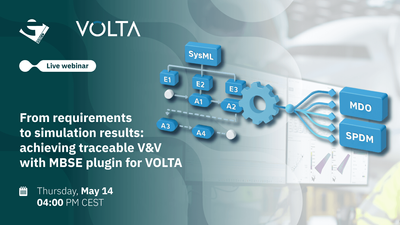
From requirements to simulation results: achieving traceable V&V with MBSE plugin for VOLTA
Watch the recording of ESTECO webinar and learn how to link SysML parametric models with physics-based simulation models for requirement verification by analysis.
eBook
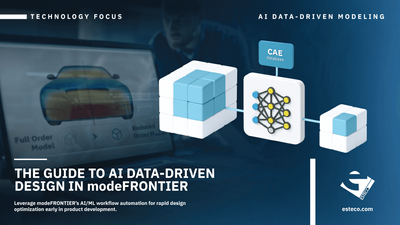
The guide to AI data-driven design in modeFRONTIER
Leverage modeFRONTIER’s AI/ML workflow automation for rapid design optimization early in product development.
White paper
The digital transformation in energy: integrating requirements, design, and simulation using a digital engineering platform
Discover how digital engineering can help your organization innovate faster, optimize performance, and support the transition toward a more sustainable energy future. Fill the form to download the white paper.
Search results for "modeFRONTIER"
Showing 31 - 40 of 44 results
Success story
Boost Signal and Enhance Antenna Reception Performance
Guaranteeing effective signal transmission with modeFRONTIER
Antenna design relies on understanding of directivity, impedance matching, radiation efficiency, wave polarization, frequency range and orientation specifications. These imply complex electromagnetic simulation analysis which can be executed by employing computer-aided optimization techniques instead of opting for time-consuming trial and error approach. ## Challenge
The present study focuses on optimizing the shape parameters of a GSM dual band mobile phone antenna to guarantee effective transmission and reception while reducing the loss of power in the signal returned at specific frequencies. The optimization case requires the satisfaction of multiple criteria at the same time. It is necessary both to minimize the return loss amplitude of the signal and the difference of the tuning frequencies at 920 and 1860Mhz. ## Solution
The geometrical structure of the antenna was modeled in Catia V5 by setting four parameters (cut position, cut width, scale ratio and antenna thickness). Then, the model was imported in CST Microwave Studio to perform accurate analysis of high frequency range. modeFRONTIER has been used to automate the entire process by integrating the CAD model in the workflow and running electromagnetic simulations. The optimization task was driven by the pilOPT algorithm which evaluated different antenna design configurations with the purpose of minimizing signal return loss and tuning the frequencies. ## Benefits
pilOPT algorithm reached optimum solutions after few design simulations. The execution of the algorithm in autonomous mode allowed to obtain the best signals of the perfectly tuned antenna just with 100 simulations performed in few hours. This methodology may be extended to any component of an electronic system (including geometrical, material and operating parameters ).
Success story
The Naviator. One of the best optimization projects at Rutgers, the State University of New Jersey
The Naviator, optimized using modeFRONTIER, was the first project to demonstrate an unmanned aerial and submersible vehicle that could operate both in air and underwater.
At Rutgers, researchers in the Department of Mechanical and Aerospace Engineering’s Laboratory for Experimental Fluids and Thermal Engineering, under the direction of prof. Diez, invented a remotely controlled drone similar to those used by hobbyists and professionals globally, but with one key difference – it is able to both fly and move underwater. The drone called Naviator, and funded in part by the Office of Naval Research, could speed search-and-rescue operations, monitor the spread of oil spills and even help the Navy rapidly defuse threats from underwater mines. Marco Maia, PhD candidate in Mechanical and Aerospace Engineering (MAE) working under Prof. F. J. Diez in the Rutgers Applied Fluids Lab and student in the Optimal Design course with Prof. Knight, worked at this outstanding project using modeFRONTIER. Most of our research thrusts involve fluids such as in electrokinetics, microfluidics & nanofluidics, wind energy, turbulence, laser diagnostics with PIV, biological flows. We pride ourselves on the applied nature of some of our research topics, such as in the development of electrokinetic thrusters, AUVs & seagliders and unmanned aerial systems. This vehicle gained a great deal of attention and Prof. Diez was able to secure a grant from the Office of Naval Research (ONR) in the amount of ~$600k. Since then, this research project has grown and has been showcased in several news outlets. Recently, National Geographic visited Rutgers University to film our latest multi-medium vehicle in action for use in one of their pieces, which we were told would be unveiled later in the summer. The optimization project in the MAE Optimal Design course with Prof. Doyle Knight was a great opportunity to make the planned improvements to our new multi-medium vehicle platform. We cannot provide too many details on the vehicle itself until its unveiling, but when we designed the new platform we purposely made it into a skeleton that could benefit from aerodynamic volumetric additions. Thanks to ESTECO for kindly making available its technology for the students of this course. With modeFRONTIER I was able to easily integrate several software together, such as MATLAB, Solidworks or ANSYS Fluent and run the necessary simulations to determine the optimal geometry for these volumetric additions using several optimization algorithms. The result was an optimal set of solutions that minimized the drag and weight while maintaining near neutral buoyancy. The autonomy and visual aids of the software were truly remarkable-it definitely streamlines the optimization process. Thank you again for allowing us to use this very useful tool”.
Success story
American Magic perfects AC75 design for the 36th America's Cup
The America’s Cup isn’t just the first sailing competition in history, it’s also the first when it comes to innovation. Learn how American Magic engineers partnered with ESTECO to prepare for their next challenge. Using modeFRONTIER in different phases of the design process, they integrated geometry changes, performed hydrodynamic CFD simulations and explored different optimization strategies. ## New design challenges: monohulls that fly
The America’s Cup is the oldest and most important trophy in sailing. What makes it unique is that the reigning champion gets to decide the rules for the next edition, like the date and the location. More importantly, it defines boat class and design rules.
The 33rd America’s cup in 2010 pushed the boundaries of boat design by introducing new technologies, design concepts and materials. When BMW Oracle pitted its 34-meter trimaran and 55-meter high rigid wing against Alinghi in the first regatta, it won by 15 minutes, sailing at more than 18 knots in 8 knots of wind. The 36th America’s Cup builds on changes to previous edition class rules with a new boat concept: a monohull racing boat that doesn’t sacrifice the concept of flying boats. Two t-shaped side foils guarantee that the boat flies above the water. Engineers can’t rely on previous experience and now find themselves having to design a completely new boat. Moreover, competition rules allow teams to design only certain parts of the boat, like foil wings, sails, hulls and systems, while others must be designed by third parties. Whereas the foil wing structure and profile can be designed by teams, the arm structure is determined, designed, and built by a supplier company.
American Magic is using ESTECO technology in each phase of the design process, from concept to the refinement of foils and sails. Specifically it uses modeFRONTIER. Its process automation, intelligent algorithms and advanced post-processing capabilities enable engineers to deliver optimized solutions faster. ## Complex simulation studies on foil and mainsail geometries
The AC75 has two t-shaped side foils. The arm is attached to the hull with a moving joint which allows the crew to move the foils in and out of the water according to the sailing mode. On the other end of the arm is the foil itself. The foil has a main airfoil profile section coupled with moving flaps. Internally, enough space must be guaranteed for the systems to operate the flaps. Foil design is challenging because it involves the simulation of myriad geometries in different configurations and under multiple operating conditions - all of which determine boat performance. Foils need to create low drag but generate enough force to enable the boat to lift at the start and fly during the race. Righting moment is required to balance the heeling moment of the sails. At higher speeds, cavitation can cause significant loss in performance. Stability is fundamental, especially during maneuvers.
In the first stage, hydrodynamic performance is computed using a low-fidelity solver that takes into account the different operating conditions - namely speed, sailing mode and position in the water. In the second stage, the full 3D geometry is designed and evaluated using CFD simulations. High-fidelity simulations can’t be used directly in the first stage of development due to lengthy computational times. The sail plan is composed of the mainsail and a jib or code zero, which are interchangeable. All dimensions are restricted by rules, so engineers can optimize the shape within specific limits. The mainsail is a twin skin sail that acts like an airfoil. By adjusting mast rotation, twist and boom position, the 3D geometry of the mainsail can be tuned for different wind speeds and sailing modes foils, the aerodynamic forces are tuned to generate lift, maintaining momentum and low drag. ## Getting foil and sail design just right
American Magic engineers are using several simulation software for the foil and sail design which consists of three steps: geometry definition, force computation and boat speed estimation. The entire process is automated in modeFRONTIER. Multiple workflows handle input modifications, the execution of different tools and file and data exchange.
Mares, developed by Airbus, handles the geometry generation of the airfoil and the flap, considering different combinations. Hydrodynamic forces generated by the foil, lift, drag and momentum, as well as cavitation speed are obtained through CFD simulations. The designers use a low fidelity 1D potential-based code in the initial phases to evaluate multiple configurations in a small amount of time. American Magic uses a RANS-based tool to perform high fidelity 3D simulations in the final refinement and optimization phase. Both Mares and the CFD tools are coupled with modeFRONTIER using Easydriver nodes. This enables them to couple their in-house tools using input and output files and customize execution scripts. Geometry consistency is guaranteed by constraints that filter out weird shapes and meet requirements for internal cabling and mechanisms as well as cavitation limits.
The main goal of the optimization is to minimize drag for specific lift values. It isn’t enough to understand the efficacy of a foil shape. It’s important to understand how the boat behaves. An in-house Velocity Prediction Program (VPP) software estimates the overall boat performance at different wind speeds and sailing modes. The software uses forces generated by foils and sails to find the overall boat equilibrium and predict boat velocity. A nested modeFRONTIER workflow handles different operating conditions. These are sequentially run, using internal loops to compute the global performance of the design. Multiple operations are handled in parallel to make the most of computational resources. Once the forces are solved, these are passed on to the VPP calculation. Foil and sail design share most of the process and simulation tools but defining the geometry is more complex. The mainsail is divided into several sections where each section can have a different shape based on input values. On top of this, optimal adjustments for every shape need to be calculated. This results in large numbers of configurations which are run to find the best design. It’s fundamental to formulate constraints based on maneuverability, considering adjustments that are feasible for the crew - optimal solutions have no meaning if they are too complex to be performed during the race.
Each design phase requires a different optimization strategy. In early stages, genetic algorithms guarantee robustness to find the global optimum in a large design domain. In the last phase, it’s important to cut optimization time - conventional techniques aren’t feasible. Therefore, multi-strategy algorithms are used in combination with advanced initialization techniques to speed up the whole optimization process. ## American Magic and ESTECO - partners in innovation
The American Magic design team relied on ESTECO technology in the design and optimization of the boat. Paolo Motta, Performance Prediction Engineer says, “The AC75 is a complex racing boat with interacting subsystems. This makes the design process a challenging and time-consuming task. Using modeFRONTIER process automation, intelligent algorithms and decision making capabilities enables us to decrease foil optimization time from 3 weeks to 4 days. This gives us time to discuss and think about present challenges and develop new solutions”. According to Arthur Rozand, Performance Prediction Engineer, “The key benefit of using modeFRONTIER is to have a suite of tools in one place. In this way it’s easy to manage design and optimization from the exploratory phase to post-processing and decision making. Time is a constraint in development. With modeFRONTIER, we have the flexibility to tailor the strategy. For example, in the early stages of development, DOE strategies and the sensitivity analysis tool help us understand which design variables are the most important. In the final stage of development we use multi-strategy algorithms and advanced charts to select the best design.” “Our partnership with ESTECO is bringing in great results.” says Giorgio Provinciali, Velocity Prediction Program (VPP) Lead, “Working side-by-side with ESTECO engineers enables us to pool our respective expertise to get the most out of modeFRONTIER”.
Success story
Handling the Complexity of Mechatronic System Design
ABB Group, a global leader in power and automation technologies, covers almost every segment of the power generation and industrial process control market with its products and systems. With $1.4 billion in annual investments, the 8,500 engineers and scientists at ABB Research & Development are committed to meeting the automation industry’s ever-increasing demand for reducing energy consumption and improving reliability and performance. The design projects illustrated here highlight how ABB Group leverages optimization-based development to handle the complexity that electronic and software components entail. Looking at system interdependencies from the earliest concept phase is crucial for an effective strategy that aims at maximizing product performance, meeting reliability demands and easing the environmental impact of their products. ## Optimization-Based Development of Ultra High Performance Twin Robot Xbar Press Tending Robot System
The industry challenge
Industrial robots are sophisticated systems incorporating hardware and – increasingly – software components. Subsystem design (gearboxes, motors, sensors and brakes) and the interactions between elements such as machine interfaces, safety integrations, field buses, PCBAs, power supplies and drive modules must be carefully planned to assure the best possible performance. Over the years, cost pressures have made robots a commodity in terms of physical specifications. Among the many design challenges, the need for lighter components has resulted in reduced stiffness, making the control problem more complex. Furthermore, many third-party interfaces require integration and products that must comply to software, electrical and mechanical quality standards.
ABB experience
In the case of the Twin Robot Xbar Press Tending Robot System, one of ABB’s flagship robots, engineers considered 18 design variables (representing the gear torque, motor torque and motor speed) and managed objectives and constraints in modeFRONTIER, achieving a 12% energy saving, solely by varying the software components. “We optimized this robot ‘manually’ for 30 years and it is one of the most used. With modeFRONTIER we were able to identify a new design – requiring no implementation costs – bringing 12% of energy savings without compromising performance by changing only the software configuration. Obviously, this is something that can’t be done by hand – you need an optimization software to do it.” says Dr. Wappling, Global R&D Manager at ABB. ### Benefits
“The ability to manage mechatronics is becoming increasingly important as simulation encompasses more and more systems and not just components: the impact of the mechanics, electronics and software all need to be accounted for.” continues Wappling. ESTECO technology keeps pace with evolving R&D needs and provides designers with a flexible environment that handles each delicate step of complex system analysis and enhancement. As seen in the example of the robot, inserting virtual control models in the simulation framework enables designers to apply the optimization approach, calibrate the software and identify zero-cost solutions. ## Multiobjective Optimization of a Medium Voltage Recloser
The challenge
Medium voltage reclosers now represent an important grid protection device that connects different grid sources, increase the network/grid reliability and make the implementation of self-healing and auto reconfiguration schemes for overhead lines possible. With a high level of renewable energy penetration, medium voltage networks are becoming bidirectional. Therefore, the associated switching devices must ensure the protection of newer types of power systems as well as new types of loads. The optimal design of medium voltage reclosers is therefore important in order to enable excellent switching capabilities. The switching capabilities of medium voltage recloser can be influenced by various parameters such as actuation energy responsible for opening and closing the device. Therefore, to maximize the lifetime of the recloser, it is essential to establish an optimized control especially related to the actuation energy. The goal of the multi-objective optimization is to identify an optimal actuation energy control strategy for the closing and opening operations.
The solution
ABB R&D Teams built a two-step optimization framework that incorporates the energy efficiency constraints by working initially on the electromagnetic actuator and directly optimizing the Finite Elements Model (FEM). The numerical simulation step was then completed with physical calibration via a Hardware-in-the-Loop (HIL) optimization process, ensuring that the whole system reaches the desired performance. During the first iterations, modeFRONTIER helped improve the FEM model by identifying the best configuration possible for the electromagnetic system, while satisfying the constraint imposed by the design boundary conditions. The parameterized FEM model created with COMSOL Multiphysics was connected to Matlab LiveLink so as to pilot all design changes automatically and control both models in sequence, leveraging the direct integration node for Matlab in modeFRONTIER. In the second step, the R&D Teams opted for the in-depth analysis of the system where modeFRONTIER was coupled both with the simulation model and with the hardware to further enhance the switching properties. The HIL framework enabled an investigation environment for the whole recloser system.
Thanks to this approach, optimization can be applied to the control scheme implemented with CompactRIO/LabVIEW: after running one full closing-opening operation, data is transferred to Matlab for post processing and reinserted in the loop for the next runs. Since reducing overtravel and backtravel is extremely important for the product lifetime, with modeFRONTIER piloting the HIL system (1,500 runs with a DOE featuring selected parameters from the first optimization step), R&D Scientists pinpointed a new control scheme that enables significant extension of the product lifetime. “The identified control scheme enables up to 50% reduction of the overtravel and backtravel, enabling a remarkable improvement in terms of lifetime”, says Octavian Craciun Senior Scientist at ABB.
Success story
Optimal Design of an Unmanned High-Altitude Solar-Powered Airplane
Optimal Design of an Unmanned High-Altitude Solar-Powered Airplane
In recent years the development of High Altitude/ Long Endurance (HALE) solar-powered unmanned aerial vehicles (UAVs) has been gaining importance. Such aircrafts could serve as “pseudo satellites”, with the advantages of being closer to the ground, more flexible and less expensive when compared to common satellites. Using a combination of a solar array and batteries and without requiring sophisticated assisted take-off systems these UAVs could potentially cover a 1,000 km diameter area and process about 425,000 cell phone conversations while sustaining long endurance flights. ## Challenge
Stability and control are critical issues in any aircraft design, more so in this case particular care was paid to this problem especially considering that the airplane flies at altitudes of up to 17km. Another concern is how to identify the best setup of battery packs and power system in order to comply with aircraft standards and regulations. The researchers of the Brazilian Instituto Tecnológico de Aeronáutica worked on the enhancement of a light-weight solar-powered UAV model, featuring a rectangular wing with a conventional tail connected to the wing by means of a boom and two engines located on the inner wing. The baseline airplane gross weight was 30.1 kg and the battery fraction, impacting the overall weight, was very high. With this in mind, the researchers sought the best configuration of selected parameters - geometry, aerodynamics, structures, stability, weight and systems. The multi-objective optimization was concerned with
maximizing the available electrical power while reducing the gross weight of the airplane configuration. ## Solution
The multi-disciplinary workflow built with modeFRONTIER took into account the stability constraints and the area of solar panels, which could not exceed the dedicated portion of the wing. The objective of the optimization was to minimize weight and maximize the power surplus. The wing area range could vary between 30 and 60 m2, and after 40 generations with 30 individuals each, the MOGA-II algorithm returned a group of feasible designs. The best configuration featured a 50% expansion in wing area, admitting a larger solar panel resulting in a considerably higher power availability with a slight increase in aircraft weight. ## Benefits
The choice of modeFRONTIER as the multi-objective optimization tool provided researchers with a large variety of configurations in less than one day’s computation. For each design solution, engineers identified the strengths, weaknesses and typical values of the variables in order to introduce the improvements sought. “The disciplines of aerodynamics, structures, stability, weight, and systems were all considered and integrated in a modeFRONTIER workflow, capable of providing a relatively simple resizing, but highly realistic airplane”, said Bento Silva de Mattos of the Instituto Tecnológico de Aeronáutica. This case study clearly demonstrates the added value achieved by combining optimization and simulation. With only a few semi-empirical mathematical models and data obtained with the computations and the application of simple theories, it was possible to reach the optimal design and verify the consistency of the solution.
Success story
Diesel fuel efficiency takes shape with optimization
ISUZU Advanced Engineering Center (IAEC) enhances fuel efficiency by optimizing the combustion chamber design
In the debate on how best to tackle the impact of vehicles on environment, the improvement of diesel engine efficiency has emerged as a transitory but effective solution, especially for heavy-duty vehicles and passenger cars. Designers at the ISUZU Advanced Engineering Center (IAEC) have analyzed how to enhance fuel efficiency by modifying the shape of the diesel engine combustion chamber. ## Challenge
Theoretical thermal efficiency affects fuel consumption in diesel engines and one way of improving it is to increase the combustion chamber compression ratio. The resulting higher in-cylinder temperature and the expansion of the impingement area between fuel spray and chamber wall, however, can cause the chamber wall to heat up and lower theoretical efficiency. The team at IAEC looked at a new way of lowering heat loss by studying the combustion chamber shape, preventing the volumetric inefficiencies and cost and durability issues, which other methods caused.
Solution
To analyze the impact of the different chamber shapes, the team first defined the chamber outline and spray angle2 and adjusted it to match a given baseline compression ratio. The computational mesh was then created with CONVERGE CFD and modeFRONTIER was used to pilot the 3D-CFD simulations. “In this way, we were able identify the shapes with the maximum cumulative heat release and work, and – at the same time - the minimum heat loss” says Takashima, Chief Engineer Powertrain Product Planning at IAEC. ## Benefits
“The shape with the highest cumulative rate of heat release was analyzed in depth. We compared it to calculated heat release rates and cylinder gas temperature profiles of re-entrant-type and shallowdish-type chambers and, later, verified it using experimental data from a single-cylinder engine. The optimized chamber improved fuel consumption by 3.2% compared to its shallow dish type counterpart. modeFRONTIER helped us spot the optimal shape and further analyze the delicate tradeoffs regarding the thermal balance” concluded Arato.
Success story
Perfecting the manufacture of pressurized gas vessels
Funded by the European Union, the GASVESSEL project aims to prove the techno-economic feasibility of a new transport concept for compressed natural gas (CNG). ESTECO, in partnership with other industrial organizations from the energy, Oil&Gas and naval engineering fields, has developed an innovative solution to manufacture pressure vessels that are considerably lighter than the current state-of-the-art alternatives. These super-light pressure vessels enable new ship designs that have much higher payloads and dramatically lower transportation costs per volume of gas. ## Challenge
Traditional pressure vessels normally used to transport liquified gas by ship cannot be used to transport CNG. This is because the relevant thickness of the ship walls required to maintain the operating pressure of 300 bar would add significant weight to the vessels, reducing their loading capacity. In fact, one of the main challenges addressed by the project is to produce lightweight pressure vessels for the transport of CNG using filament winding, which is a popular method suitable for manufacturing axisymmetric structures that are light and stiff. It involves the use of several layers of fiber-reinforced composite materials wrapped around a thin internal metal liner. ## Solution
During the design phase, the material and geometrical parameters of the vessel (mainly related to the number and winding angle of the layers, the percentage of composite fibers and the liner’s mechanical properties) were considered for optimization to reduce the weight and costs while honoring the structural constraints. The winding process was physically modelled with CADWIND software to evaluate the distribution of composite layer thickness at each point of the vessel. The filament winding simulation model and the stress analysis of the vessel were then integrated in a modeFRONTIER workflow to evaluate the different solutions and choose the best designs. The optimization task, which aimed to maximize the uniformity of distribution of the winding layers and minimize their number while respecting the structural constraints of the vessel, was conducted using pilOPT, ESTECO proprietary autonomous algorithm. ## Benefits
modeFRONTIER process automation and optimization capabilities enabled the engineers involved in the project to automatically evaluate thousands of gas vessel designs in just a few days, as opposed to losing weeks by doing it manually. The Bubble Chart allowed them to visualize and identify the best candidate designs among those with the lower weight and manufacturing costs. As a result, the first gas vessel prototypes, which weighed up to 70% less than the vessels not reinforced with filament winding, could be manufactured and have already been successfully tested.
Success story
Daiwa House reforms structural analysis with collaborative design optimization
Read how Daiwa House streamlined structural calculations & cut costs with ESTECO Technology, enabling more designers to perform structural design optimization. Daiwa House Industry Co., is a pioneer in the “industrialization” of construction in Japan, and since it was established in 1955, it has been developing and supplying high-quality housing that stresses the needs of inhabitants. Today it has grown into one of Japan’s leading home builders. It has a wide range of business developments, centered around housing and extending to the construction of shops and office buildings, and it also includes the company’s own special brand of resort operations and retail do-it-yourself home centers. Daiwa House has embraced a digital strategy known as the Mobius Loop Concept, aiming to integrate technology across the building lifecycle. A key pillar of this approach is the internal mandate to adopt building information modeling (BIM) within its building division, initiated in 2017.
The company began developing a BIM platform to serve as a central hub for all project data. At the heart of this system lies the common data environment (CDE) — a collaborative space where all project members can manage all data related to the construction process and contribute to a unified 3D model. By minimizing the reliance on paper drawings and siloed workflows, Daiwa House has laid the foundation for efficient, data-driven decision-making across departments. Japan’s vulnerability to seismic activity poses a unique challenge in structural engineering. Structural design in the country must meet three fundamental criteria:
Functional requirements: meeting the client’s expectations for performance and usability.
Safety: ensuring buildings can withstand frequent and potentially devastating earthquakes.
Economic efficiency: balancing cost-effectiveness with high structural integrity.
Traditionally, Daiwa House’s structural design process involved manual iterations: engineers created a model, ran calculations, made adjustments based on experience, and repeated the process until a final plan emerged. While this approach has served its purpose, it faced four major limitations:
A limited number of design alternatives considered.
Risk of missing better solutions due to fixed thinking patterns.
Subjective decision-making based on individual judgment.
Long lead times for design completion.
Given these limitations, the need for a more efficient structural design process became clear. Daiwa House turned to modeFRONTIER and VOLTA software solutions to introduce an optimization system for their structural engineering teams, allowing them to perform many simulations more quickly.
In particular, modeFRONTIER was chosen for its ability to integrate and automate structural analysis software with the aim of performing rapid, high-volume simulations and applying design optimization methods. Engineers use it to define variables such as beam and column types, run calculations, and evaluate performance across hundreds of design variants — from cost and material usage to seismic resilience.
Once a simulation workflow is created in modeFRONTIER, it is uploaded to VOLTA platform, which allows engineers across Daiwa House’s 50+ regional branches to:
Execute the simulation workflow and apply design optimization studies remotely.
Visualize and analyze simulation results through interactive web-based dashboards.
Collaborate more easily by sharing design results and insights.
Case study highlights:
With the new optimization system, structural engineers analyzed two steel-framed buildings (a 2-story, 1000m² and a 3-story, 3700m² structure). Optimization objectives included minimizing the amount of steel structure (cost factor) and the deformation of the building (performance factor). Results showed:
7.4% cost reduction in Project 1
2.5% cost reduction in Project 2
Both while meeting or exceeding structural performance targets. Daiwa House engineers are located at various branches throughout Japan. To ensure consistent and efficient use of the optimization system across the entire company, it was essential that all engineers, regardless of their location, have access to it. That’s why they adopted the VOLTA digital engineering platform to democratize optimization across all engineers in the company, making it easy to share, monitor, and replicate best practices.
How they use it:
Upload and execute optimization workflows created in modeFRONTIER.
Visualize results across multiple projects.
Share insights with project teams and decision-makers. By integrating optimization into their structural design process, Daiwa House achieved a paradigm shift in how buildings are designed:
More design alternatives explored in less time.
Collaborative data-driven decision-making.
Clear performance insights for every design considered.
With VOLTA, Daiwa House can simulate up to 200 design alternatives — compared to just five in the traditional method — and visualize their performance clearly.
It has significantly improved collaboration, decision-making, and reduced the design time by up to 67%, which amounts to a total reduction of 2100 hours to 700 hours annually across all projects. This translates to safer, more competitive products and time savings.
Looking forward, Daiwa House plans to accelerate digital transformation by integrating optimization results with a centralized database, enabling smarter iterations and knowledge reuse. The company also sees potential to expand optimization to other structural types such as reinforced concrete (RC) structures, and architectural and equipment design.
Success story
ECS System Simulation - Architecture and Performance Optimization from the Early Phases of the System Design
ECS system simulation - Architecture and performance optimization from the early phases of the system design
The trend today in aircraft thermal design leans towards electronic system integration requiring higher heat densities and a more frequent use of composite primary structures. All these factors require thermal management and architecture design to achieve a suitable robustness, even in the early design stages. The thermal architecture should be able to prevent the risks of damage to temperature-sensitive equipment and limit the expensive overdesign of aircraft systems. ## Challenge
The optimization of the thermal architecture is considered one of the key factors of future aircraft development. It requires a composite pyramid of simulation tasks to be set and managed: from equipment to aircraft section simulation to the global aircraft thermal analysis. Adopting this approach gives rise to a number of difficulties due to the variety of physical models to be integrated and the partners, techniques and tools interacting at each level of the pyramid. This case study from Leonardo’s Environmental Control System (ECS) department shows how the different design disciplines involved are handled effectively through process integration and automation, enabling the optimization of the overall performance from the early stages of system design. One of the systems considered in the ECS design at Leonardo is the air conditioning pack and distribution system. The air, supplied from the engine compressor, is processed in the conditioning pack before being distributed to the fuselage compartments. Enhancing the efficiency of the thermal architecture implies several constraints and requirements relating to standards-compliance and safety regulations. Designers must adhere to given A/C configurations and maintain suitable thermoacoustic insulation and temperature levels for both the cabin and cockpit. ## Solution
First, engineers at Leonardo used the TPM approach to compare the performance of two alternative architectures, preferring a parallel layout composed of an underfloor and a low pressure air line fed from the mixing chamber and distributing the airflow in parallel through a set of risers. Next, after building the model for the selected architecture and its subsystems in LMS.Amesim, the workflow for the air nozzle shape optimization was built in modeFRONTIER. “The optimization platform helped us reduce pressure loss and noise level to the minimum” says Gaetano Mirra (CTO, General Systems - ECS and Ice protection specialist at Leonardo). ## Benefits
“modeFRONTIER automation and integration capabilities enabled us to simultaneously consider the fluid dynamic and acoustic analysis and easily handle the data flow including Catia, StarCCM+ ans PostPRO simulations in a unique environment” continued Mirra. “We found the best configurations possible for the nozzle shape and refined the thermal architecture design, further enhancing passenger comfort in terms of cabin thermal environment”.
Success story
Faster than the wind: the optimization experience in the America's Cup Challenge
The 34th edition of the America’s Cup was a breakthrough event in the world of sailing, with traditional mono hulls giving way to the AC72 class foiling catamarans equipped with foils and wing sails. Since then, sailing and engineering teams have been dealing with a new set of challenges ranging from boat handling, tactics and, it goes without saying, the design of these new vessels and their subsystems. ## New America’s Cup regulations: a design challenge
From a design point of view, naval architects and engineers have been forced to rethink their way of working and open up to other design processes and methods, like in motor racing, which has already gone through a similar shift, where regulations tend to trigger a series of small incremental changes rather than radical one-off developments. Moreover, the change from yacht to flying catamaran has revolutionized sailing philosophy, leading to constant changes in speed and boat response to conditions. This means that catamaran performance needs to be maximized by taking into consideration a whole new set of predictions and external factors. When the Luna Rossa Challenge Team started developing the concept for the catamarans in view of their campaign of the 35th America’s Cup, it opted to implement design process integration and automation routines. The limitations imposed by America’s Cup regulations served to highlight the need for simulations and multi-domain analysis - tools that proved crucial to developing and improving the new AC62 class boats. ## The sailing modes and the need for optimization
The new race regulations have brought about a multifaceted design process which requires taking into account different “sailing modes” and their respective physics in parallel. Even though the impact of the hull on overall performance at high wind speeds is practically negligible, its impact becomes significant at low-to-medium sailing speeds. Whereas in displacement sailing mode, the hull is fully immersed and more than 80% of the lift is due to the buoyancy of the hull, in skimming sailing mode, wind intensity makes the boat to start flying, resulting in a reduced effect of the buoyancy to 20% of the lift force. In foiling mode, at high wind speeds, the hull is completely out of the water and the catamaran sails on foils, reaching 30 knots upwind and 50 knots downwind. Analysts therefore need to consider both hydrodynamic and aerodynamic drag when switching from one mode to another, meaning that the higher the number of different configurations in terms of hull, foils and wings considered as design alternatives, the higher the probability of enhancing the performance of each mode.
Moreover, given that regulations prevent the actual sailing of 62-foot catamarans until around five months before the competition, most of the important early design decisions are necessarily based on data taken from simulations. The highly sophisticated design skills needed and the different disciplines involved in the design make performance prediction harder, leading to the conclusion that the use, coupling and automation of simulation tools in the design process are indispensable. Add to that the sheer number of variables, constraints and objectives involved and it becomes obvious that a trial and error approach is unfeasible. These considerations led the Luna Rossa Challenge Team to adopt modeFRONTIER as its automation and numerical optimization tool of choice, ensuring an integrated design approach from the earliest stages of the catamaran design process. ## The Design Program
Hull shape optimization
As mentioned earlier, the hull is still a crucial element in the design of the boat.
In the first stage of the design process the team decided to focus on the hydrodynamic analysis, considering the displacement and skimming modes. It is in pre-start phase when the hull shape affects performance the most as the boat accelerates from an almost static condition to reach peak speed and in some of the maneuvering conditions where the wind is not strong enough to make the boat fly. To optimize the hull shape taking into account the two sailing conditions, the team developed a hull shape generator to simulate the response for each variation and calculate the drag considering exclusively the shape. Michele Stroligo, CFD Analyst at Luna Rossa Challenge, set up the logic flow with modeFRONTIER to drive the design investigation and optimization of the hull shape. He first prepared VBA macros in Excel to generate the set of control points and splines. These were then transferred to Maxsurf to create the surfaces and return a geometry file as output. CFD simulations were then computed with STAR CCM+, analyzing a single hull 3D geometry with a time-dependent simulation where the boat was free to sink, moving from the hydrostatic to the dynamic equilibrium. “The automatic process was developed using modeFRONTIER, taking advantage of the Excel direct integration node, and two scripting nodes piloting the Maxsurf routine and the execution of CFD simulations on a remote cluster. This set up enabled us to use up to 400 cores for each design, significantly reducing the computational time from 10 hours to about 40 minutes” says Stroligo.
The results from the first design step showed a reduction of drag of the order of 2% in displacement mode and of 18% in skimming mode. A single-objective process was used in the preliminary phase, where the cost function was weighted on each of the two computed conditions making this solution a compromise between the two scenarios.
In the second step, the use of a multi-objective approach gave the advantage of making the solution independent from the user defined weight, imposed previously. The geometries generated during this second optimization study ensured better results for the combined displacement and skimming conditions.
Moving forward, the team wanted to make sure that even during dynamic acceleration and take-off, the new candidates would bring about the same improvements when compared to the reference hull shape. With this in mind, the team performed a series of acceleration tests using a mathematical model that simulated wing and sail loads and the related force that pulled the boat in order to determine the time needed to switch from skimming to foiling mode. An appended hull configuration was used (hull, daggerboard, rudder and elevator) for these simulations. The angles and extensions of the appendages were the same for both cases. The comparison between a baseline hull and an optimized hull is shown in the chart below. As highlighted in the image above, the optimized hull (right) confirmed its superiority also during accelerations and take-offs, enabling the catamaran to begin the foiling phase about 5 seconds earlier, giving an advantage in terms of speed, distance traveled and agility. ### Foil optimization
The other major task of the design program at Luna Rossa Challenge was to maximize performance during in foiling mode. The use of daggerboards - or foils - enables boats to lift both hulls out of the water and “fly” in medium and high wind intensity. From a physical perspective, foils must ensure a sufficient upward lift force - approximately equal to the weight of the boat - as well as a high horizontal force to counteract the side force generated by the wing sail and jib. At the same time, the drag and roll moment had to be minimized. To be complete, the analysis also needed to take into account constraints coming from rule specifications, structural behavior, cavitation limitations and stability criteria.
“At Luna Rossa Challenge, we managed to setup a workflow that helped us explore a very wide range of foil shapes in an attempt to identify the optimum shape for given targets (drag, heeling moment, VMG…) and subject to a number of constraints (rule compliance, structural, cavitation, stability….). In this way, the exploration became fully automatic, resulting in significant time savings” says Giorgio Provinciali, Velocity Prediction Program (VPP) Leader, in charge of the foil design. The optimization workflow for the foil was built by integrating a Rhino 3D/Grasshopper model to generate the parametric 3D geometry; a CFD code (Panel code / Ranse) then evaluated the hydrodynamic performance. The geometry generation was driven by a script defining – among others - the following parameters:
A spine curve defining the front view of the foil
The leading edge shape
Chord values along the span
Airfoil thickness values along the span
Airfoil camber values along the span
Airfoil twist values along the span
Airfoil sections basic shapes along the span
The file was read and run by a Grasshopper script within Rhino 3D and the updated .igs geometry file was then transferred to the CFD code selected for the simulation - either the in-house panel code (DasBoot) or Ranse (StarCCM+). When the panel code was used, leeway and rake capable of achieving a target lift and side force were sought for different speed values. Whereas with the Ranse code, the simulated values for leeway and rake were interpolated to find the target lift and side force at given values of speed. The optimization objectives were drag and roll moment minimization at different speeds determined by the upwind and downwind sailing configuration for a given wind condition. These conditions were estimated by weighting each wind condition with the expected wind distribution at the competition venue. All inputs, geometrical variables, constraints and objectives were defined in the modeFRONTIER workflow. To successfully handle the highly constrained physical problem and efficiently explore the design space, the team opted for a combination of the ESTECO proprietary HYBRID and the NSGA II genetic algorithms. By taking advantage of the internal and automatic RSM computation of HYBRID, execution time was reduced even further.
Despite the pervasive constraints, the algorithm was able to find feasible and efficient solutions and identify the Pareto front, balancing the optimal solutions for the two objective functions. “The post-processing tools available in modeFRONTIER gave us a good grasp of the most important parameters impacting the objectives and their correlation. Even more so, these advanced tools clearly highlighted the design trends, putting us in the right direction for more detailed investigation. ### Benefits and conclusions
The America’s Cup regatta showcases the best sailing and engineering teams in the world who push design and vessel performance to the limits in their aim to win the coveted competition. Relying on design and simulation tools has become unavoidable; however, choosing the technology that serves as a true enabler of a designer’s ingenuity is still an invaluable source of advantage against other teams.
As highlighted in the case studies, modeFRONTIER gave Luna Rossa specialists four key advantages: the automation of the design processes, the seamless integration of the software chain, the effective exploration capabilities of its proprietary algorithms and – boosting the efficiency of the whole simulation process - the flexible handling of distributed computing resources. By integrating and automating the multiple tools, engineering team was able to let the complex, multi-disciplinary simulation workflows run autonomously and simultaneously consider several physical aspects while having more time to focus on design analysis, post-processing of results and in-depth decision making. The intelligent design space exploration and optimization capabilities of the algorithms combined with the efficiency of using a distributed computation set-up helped reduce the development time and quickly delivered prototypes to be tested by the sailing team. By running parallel simulations on a network of computers using the modeFRONTIER Grid Tool, designers found better solutions with a reduced number of iterations made by the robust algorithms.
Further steps of the design program at Luna Rossa aim to include the other disciplines (structures and aerodynamics) as well as other modeling approaches (VPP simulation, race modeling program, wing sail optimization, and boat handling) in the process. Provinciali concludes that “working on the Velocity Prediction Program (VPP) and race modeling within the foil design optimization workflow would allow us to optimize boat performance by also considering the race track and the wind conditions expected at the AC venue.” Stroligo points out that “sensible reduction of parallel simulation execution in this perspective gives us the option to add robustness in the design optimization process of the hull shape taking into account the variability of sea conditions as well as focus our attention on maneuver and handling requirements”.